- Free Shipping On Select Items
- Free Sample
- Sign Up and Save
Toggle Nav


Micronic Wire Mesh
TWP Inc.’s micronic wire mesh offers exceptional particle retention, making it ideal for industrial and building construction applications. Its superfine, durable filtration is used in HVAC systems, hydraulic filters, breather vents, drainage layers, and protective facades.
With proven performance across sectors such as pharmaceuticals, agriculture, automotive, architecture, and waste management, TWP’s mesh delivers efficient, long-lasting solutions in demanding commercial environments.
What is Micronic Wire Mesh?
Micronic wire mesh is a super-fine metal filtering cloth with very small openings, measured in microns. Micronic wire mesh is different than standard wire mesh because it specifies the exact, microscopic size of the openings. Standard wire mesh can range from coarse chicken wire to very fine filters. Micro filter cloth is best suited for fine filtration applications because it has predictable pore sizes and offers exceptional stability.
Plain Dutch Weave vs. Twill Dutch Weave
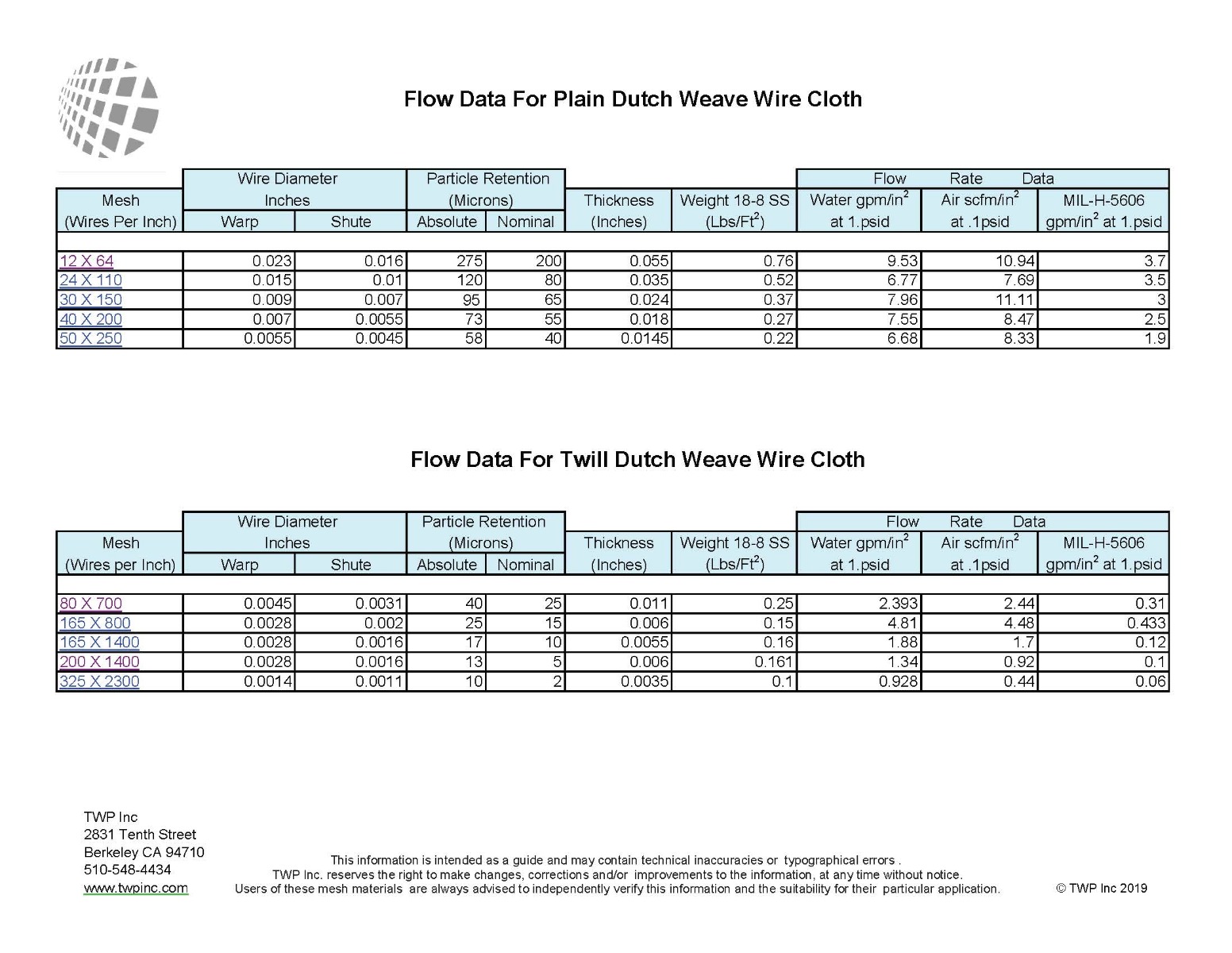
TWP Inc. carries two types of precisely woven micron wire mesh which differ in appearance and application: Plain Dutch Weave Wire Cloth and Twill Dutch Weave Wire Cloth.
Plain Dutch Weave filters use a plain (over-under) weave with heavy, closely spaced wires that form tapered, pyramidal pores. Twill Dutch Weave features a twill (over-two, under-two) pattern, resulting in finer, tighter weaves.
Twill Dutch Weave is generally stronger since it uses thicker wires and tighter weaves for high-pressure conditions. Plain Dutch Weave is a bit more rigid and prone to wire displacement when under high stress.
Twill Dutch Weave offers finer micron ratings due to higher wire density, while Plain Dutch Weave is better for coarse filtration with less precision at fine micron levels.
Ideally, Plain Dutch Weave is suitable for water/oil filtration and general straining. Twill Dutch Weave is best for high-pressure hydraulic filtration, chemical filtration, and fine powder/slurry filtration.
Micronic Wire Mesh Grades & Materials
TWP Inc.’s micronic filter cloth mesh meets the quality and performance requirements of ASTM E2814-18, the standard specification for industrial woven wire filter cloth. As a trusted supplier, TWP Inc. provides precision-woven stainless steel mesh with reliable micron ratings, consistent weave patterns, and durable construction—ideal for demanding filtration applications across various industries.
T-304 Stainless Steel Micronic Wire Mesh Filter Cloth
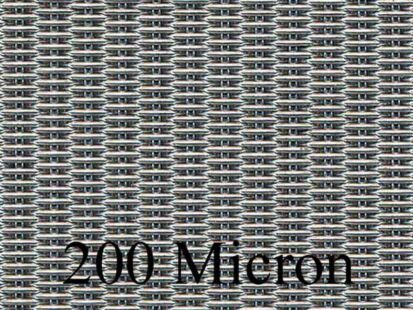
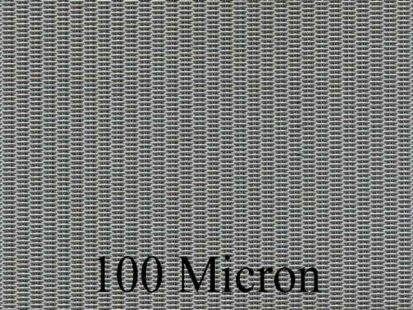
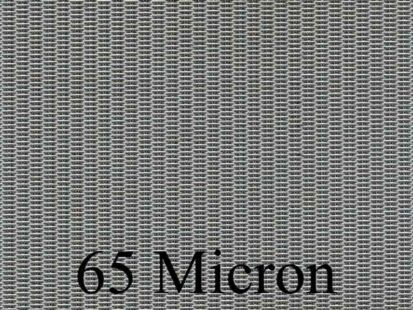
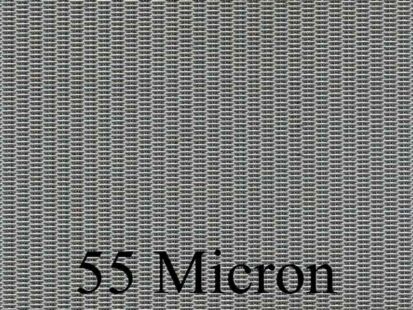
TWP Inc. offers a wide selection of micronic wire mesh filter cloth in durable T-304 stainless steel (UNS S30400), designed for precision filtration in demanding environments. From heavy-duty Dutch weaves with 200-micron openings to ultra-fine, light-tight meshes used in separation, fuel filters, gas diffusers, and vents at 65-micron and 55-micron precision-woven stainless steel—ideal for applications requiring reliable particle retention and consistent performance.
T-316 Stainless Steel Micronic Wire Mesh Filter Cloth
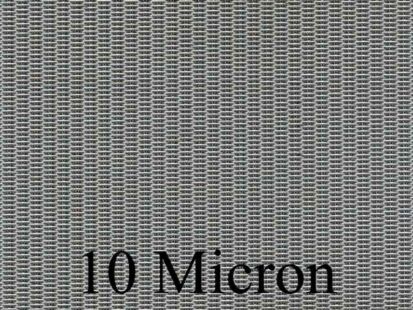
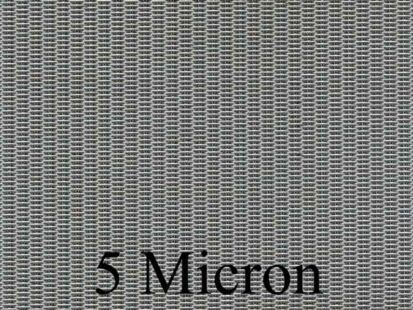
T-316 stainless steel (UNS S31600) micronic wire mesh offers superior corrosion resistance for harsh or chemically aggressive environments. Available in light, tight weaves, options include 10-, 8-, 5-, and 4-micron stainless steel screens. These fine filtration meshes provide reliable performance for critical applications in industries such as pharmaceuticals, food processing, marine, and chemical processing.
T-316L Stainless Steel Micronic Wire Mesh Filter Cloth
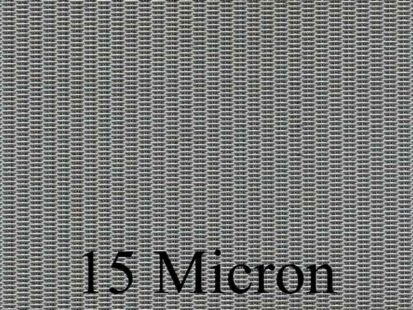
TWP Inc. also offers micronic wire mesh in T-316L stainless steel (UNS S31603), a low-carbon alloy known for its enhanced corrosion resistance and weldability. This material is available in ultra-fine twilled Dutch-weave meshes, including 15-, 10-, 5-, and 2-micron precision screens, down to TWP’s finest mesh at 1 micron. Ideal for high-purity and critical filtration applications, T-316L mesh is widely used in the pharmaceutical, biotech, and high-end chemical processing industries.
Micronic Wire Mesh vs. Sintered Mesh
Unsure whether you need micronic wire mesh or sintered mesh? This brief guide will help you decide.
Construction: Micronic wire mesh is woven using fine-gauge wire with graduated pores. Sintered mesh fuses multiple layers together to create a single rigid structure.
Strength: Sintered mesh is stronger than micronic mesh and resists high pressure better. Micronic mesh is more flexible and is ideal when conformability is needed.
Cleanability: Sintered mesh is designed to handle aggressive cleaning, including backwashing, ultrasonic, and reverse flow. Micronic mesh is cleanable, but is more prone to wire displacement over time than sintered mesh.
Cost: Micronic wire mesh is more budget-friendly for moderate filtration needs, whereas sintered mesh is best for high-durability applications.
Instant Quotes on Custom-Cut Micronic Wire Mesh Discs
TWP Inc. offers instant quotes on custom-cut micronic wire mesh filter discs, using precision stamping (“blanking”) for the most cost-effective and accurate fabrication of flat shapes. With state-of-the-art equipment and decades of expertise, we deliver consistent quality for industrial applications. Since 1969, TWP has supplied stamped and laser-cut mesh discs in a wide range of materials, weaves, coatings, and sizes to meet the demands of industries nationwide.
Micronic Wire Mesh FAQs
What micron rating do I need for hydraulic filtration?
Most hydraulic systems work best with filtration in the 3–25 µm range, but the exact rating will depend on the system’s pump type and pressure sensitivity.
What micron rating do I need for pharmaceutical applications?
For sterile pharmaceutical applications, filtration generally requires at least a 0.2 µm rating, which is the industry standard for removing bacteria and microorganisms.
What micron rating do I need for food processing?
The micron rating needed for food processing depends on the product. For example, beverage clarification often uses 1–10 µm, while food-grade screening for grains or powders ranges from 40–150 µm.
What micron rating do I need for air filtration?
Air filters are commonly rated by efficiency at 0.3 µm, such as with HEPA filters, rather than a simple micron cutoff.
Reference Table
|
Micron Range |
Filtration Level |
Example Applications |
|
0.01–0.1 µm |
Ultrafiltration |
Virus removal, vaccine production, ultrapure water for semiconductor manufacturing |
|
0.1–1 µm |
Microfiltration |
Bacteria removal, beverage clarification (beer, wine), pharmaceutical sterile filtration |
|
1–5 µm |
Fine Filtration |
Pharmaceutical injectables, fine chemical processing, paint and coatings, HEPA pre-filtration |
|
5–10 µm |
Fine Particulate |
Hydraulic fluid polishing, fuel filtration, food/beverage clarification, compressed air systems |
|
10–25 µm |
General Industrial |
Hydraulic and lubrication systems, coolant filtration, industrial water treatment |
|
25–40 µm |
Coarse-Fine |
General machinery protection, paint spray booths, HVAC intermediate filters |
|
40–75 µm |
Coarse |
Woven wire mesh screening, aggregate/mining separation, agricultural sifting |
|
75–150 µm |
Coarse Screening |
Sand and gravel classification, powder/granule sizing, industrial sieving |
|
150–500 µm |
Heavy-Duty Screening |
Mining and mineral processing, wastewater pre-treatment (grit removal), grain processing |
|
500 µm+ (0.5 mm+) |
Coarse Mesh/Screening |
Bulk material handling, construction aggregate sorting, large debris filtration |
-
 Looking for more? Check out our DIY & Home Projects Shop Now