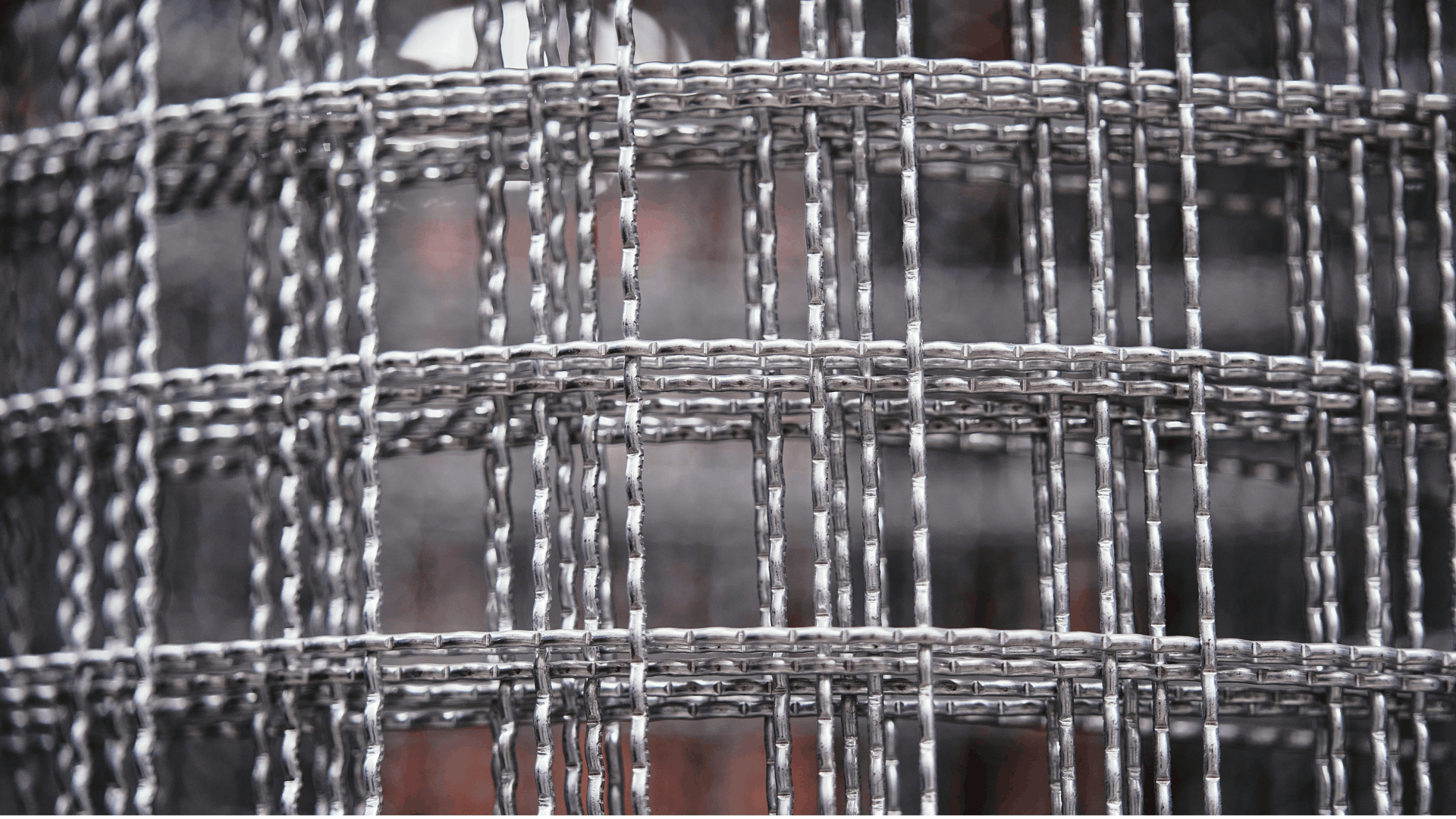
Stainless steel wire mesh is valued for its durability, strength, and corrosion resistance. However, not all stainless steel alloys perform the same way. Choosing between T-304 and T-316 stainless steel wire mesh can affect how well your material withstands moisture, chemicals, salt, and other environmental conditions.
Both alloys are popular choices for industrial filtration, manufacturing, construction, and food processing. T-304 stainless steel is a versatile, cost-effective option for many everyday applications, while T-316 offers enhanced corrosion resistance in more demanding environments.
So, how do you decide between 304 vs 316 stainless steel? Understanding the differences in composition, corrosion resistance, mechanical strength, and food-grade suitability can help you select the right mesh for your application.
Stainless Steel 304 vs 316: What Is the Difference?
The main difference between T-304 and T-316 stainless steel is their chemical composition. Both alloys contain chromium and nickel, which help protect the steel from corrosion. T-316 also contains molybdenum, which improves its resistance to certain corrosive environments, particularly those involving chlorides.
Here is a closer look at each alloy:
T-304 stainless steel: Often called 18-8 stainless steel because of its approximate chromium and nickel content, T-304 is a versatile alloy suitable for many industrial, commercial, and residential applications. It offers dependable corrosion resistance at a generally lower cost than T-316.
T-316 stainless steel: This alloy typically contains approximately 16%–18% chromium, 10%–14% nickel, and 2%–3% molybdenum. Its composition helps it withstand chloride exposure, saltwater, and certain chemical environments better than T-304.
T-316L stainless steel: The “L” stands for low carbon. T-316L has lower carbon content than standard T-316, reducing the risk of sensitization and associated corrosion during welding or other high-temperature fabrication processes.
Explore TWP Inc.’s stainless steel wire mesh selection to compare available materials and product configurations.
304 vs 316 Stainless Steel Corrosion Resistance
Corrosion resistance often decides which alloy to choose. Although both grades resist rust better than ordinary carbon steel, their performance varies by environment.
When Is T-304 Stainless Steel a Good Choice?
T-304 suits many applications in indoor environments, moderate moisture, and general industrial use. It is commonly used for filtration, equipment components, protective screens, and other applications with limited exposure to aggressive chemicals or high chloride concentrations.
For example, T-304 wire mesh may suit a general-purpose filter or protective enclosure in a relatively mild environment. Its corrosion resistance, versatility, and affordability make it a practical choice for many projects.
When Should You Choose T-316 Stainless Steel?
T-316 is often the better option when wire mesh will encounter saltwater, chloride-containing solutions, or certain corrosive chemicals. The addition of molybdenum improves its resistance to pitting and crevice corrosion, which can occur when corrosive substances attack localized areas of a metal surface.
Common applications include:
Chemical processing equipment
Marine environments and coastal installations
Pharmaceutical and laboratory applications
Saltwater filtration systems
Food processing equipment exposed to corrosive cleaning conditions
Although T-316 offers improved corrosion resistance, it is not immune to corrosion. Chemical concentration, temperature, exposure time, surface condition, and cleaning practices all affect performance.
For additional technical information, see Rolled Alloys’ comparison of 304 and 316 stainless steel.
304 vs 316 Stainless Steel Strength: Which Alloy Is Stronger?
When comparing 304 vs 316 stainless steel strength, the difference is less significant than many buyers expect. Both are austenitic stainless steel alloys with broadly similar mechanical properties. Neither grade is automatically the stronger choice for every wire mesh application.
The actual strength of a wire mesh product depends on several factors, including:
Wire diameter: Thicker wire generally resists bending and deformation better.
Mesh opening size: The spacing and arrangement of the wires influence the mesh's overall behavior under load.
Construction method: Woven and welded mesh have different structural characteristics. Welded mesh has bonded intersections, while woven mesh derives its structure from interlaced wires.
Application and loading: A filter screen, machine guard, and structural reinforcement panel have different performance requirements.
T-304 can provide excellent strength and durability for general-purpose applications. T-316 offers comparable mechanical performance while providing better corrosion resistance in many chloride-rich environments.
If strength is your primary concern, evaluate the specific wire diameter, opening size, construction, and expected load rather than choosing an alloy based on its grade alone.
TWP Inc. offers welded stainless steel wire mesh in T-304, T-316, and T-316L for applications requiring different combinations of rigidity, durability, and corrosion resistance.

Food Grade Stainless Steel 304 vs 316: Which Is Better?
Both T-304 and T-316 stainless steel can be used in food-related applications. The right choice depends on the food being processed, the equipment design, sanitation procedures, and applicable regulatory requirements.
T-304 for Food Processing
T-304 is widely used in food preparation and processing equipment because it offers good corrosion resistance, cleanability, and durability in many common food-handling environments.
It may suit applications involving dry foods, general food handling, and routine cleaning when operating conditions match the alloy.
T-316 for More Demanding Food Environments
T-316 may be preferable when equipment is exposed to salty foods, acidic ingredients, chloride-containing cleaning solutions, or more aggressive sanitation conditions. Its molybdenum content improves resistance to localized corrosion in these environments.
However, alloy type alone does not determine food-grade suitability. Also consider the finished mesh, surface condition, equipment design, cleaning requirements, and relevant food-contact standards.
Before selecting mesh for direct food contact, verify the material specifications and applicable requirements for the intended use. Do not assume every stainless steel mesh product is automatically approved for every food-processing application.
TWP Inc. offers stainless steel mesh options for filtration and other industrial uses. Explore wire mesh for food drying applications to learn more about mesh selection for food-related projects.
T-304 vs T-316 vs T-316L Stainless Steel: Comparison Table
Although T-304, T-316, and T-316L share many characteristics, their differences can help narrow your material selection.
Feature | T-304 | T-316 | T-316L |
Chromium content | Approximately 18%–20% | Approximately 16%–18% | Approximately 16%–18% |
Nickel content | Approximately 8%–10.5% | Approximately 10%–14% | Approximately 10%–14% |
Molybdenum | None intentionally added | Approximately 2%–3% | Approximately 2%–3% |
Carbon content | Higher maximum than 316L | Higher maximum than 316L | Low carbon, typically 0.03% maximum |
General corrosion resistance | Good | Very good | Very good |
Chloride resistance | Lower than T-316 | Improved | Improved |
Mechanical strength | Similar to T-316 in many applications | Similar to T-304 in many applications | Depends on product condition and specifications |
Welding considerations | May require attention to post-weld corrosion | May require attention to sensitization | Lower carbon helps reduce sensitization risk |
Relative cost | Generally lower | Generally higher | Generally higher than T-304 |
Common applications | General industrial mesh, screens, and enclosures | Marine, chemical, and demanding filtration environments | Welded or fabricated equipment requiring low-carbon material |
Note: Composition ranges and mechanical properties vary by applicable material specification and product form. Consult the relevant material certification and product specifications before making a final selection.
How Do You Choose Between the Three Grades?
Use the following guidelines as a starting point:
Choose T-304 for many general-purpose applications with moderate corrosion exposure and cost as a key consideration.
Choose T-316 when you need enhanced resistance to chlorides, saltwater, or certain chemicals.
Consider T-316L when welding or high-temperature fabrication makes the lower carbon content particularly beneficial.
T-316L is not necessarily stronger than T-316. Its main distinction is its lower carbon content, which can improve resistance to certain welding-related corrosion problems.

How to Choose the Right Stainless Steel Wire Mesh
Selecting the right alloy is only one part of choosing wire mesh. Before ordering, consider the following questions:
What environment will the mesh encounter? Identify moisture, salt, chemicals, temperature changes, and cleaning agents.
What will the mesh do? Filtration, separation, screening, guarding, and reinforcement have different requirements.
What opening size and wire diameter do you need? These dimensions affect filtration performance, airflow, rigidity, and strength.
Will the mesh contact food or other regulated materials? Confirm the applicable material and product requirements.
Does the mesh need to be cut to a specific size? Verify the dimensions and required tolerances before ordering.
For specialized filtration applications, TWP Inc. also offers micronic stainless steel mesh and sintered wire mesh. Reviewing the available product types can help you identify an option suited to your filtration or separation requirements.
TWP Inc. maintains an extensive inventory of wire mesh products, with in-stock materials and shipping options to help customers source the mesh they need. Availability varies by alloy, mesh count, wire diameter, and product configuration.
If you are comparing options, mesh sample kits may help you evaluate products before placing an order.
Find the Right Stainless Steel Mesh for Your Project
The choice between 304 vs 316 stainless steel ultimately depends on your operating environment, performance requirements, and budget. T-304 is a reliable, economical choice for many general applications, while T-316 offers enhanced corrosion resistance in chloride-rich and more demanding environments. T-316L also offers an advantage when low carbon content is important for welded or fabricated components.
TWP Inc. is a woman-owned wire mesh supplier serving customers across industrial, construction, and other markets. With a wide selection of stainless steel mesh products and services, including measuring, slitting, cleaning, and laser cutting, TWP Inc. can help you explore suitable options for your project.
Ready to find the right material? Browse the stainless steel wire mesh selection, learn about available mesh services, or request a quote. You can also contact TWP Inc. for help identifying a product for your application.