- Free Shipping On Select Items
- Free Sample
- Sign Up and Save


Micro Mesh Gutter Guard Comparison Guide
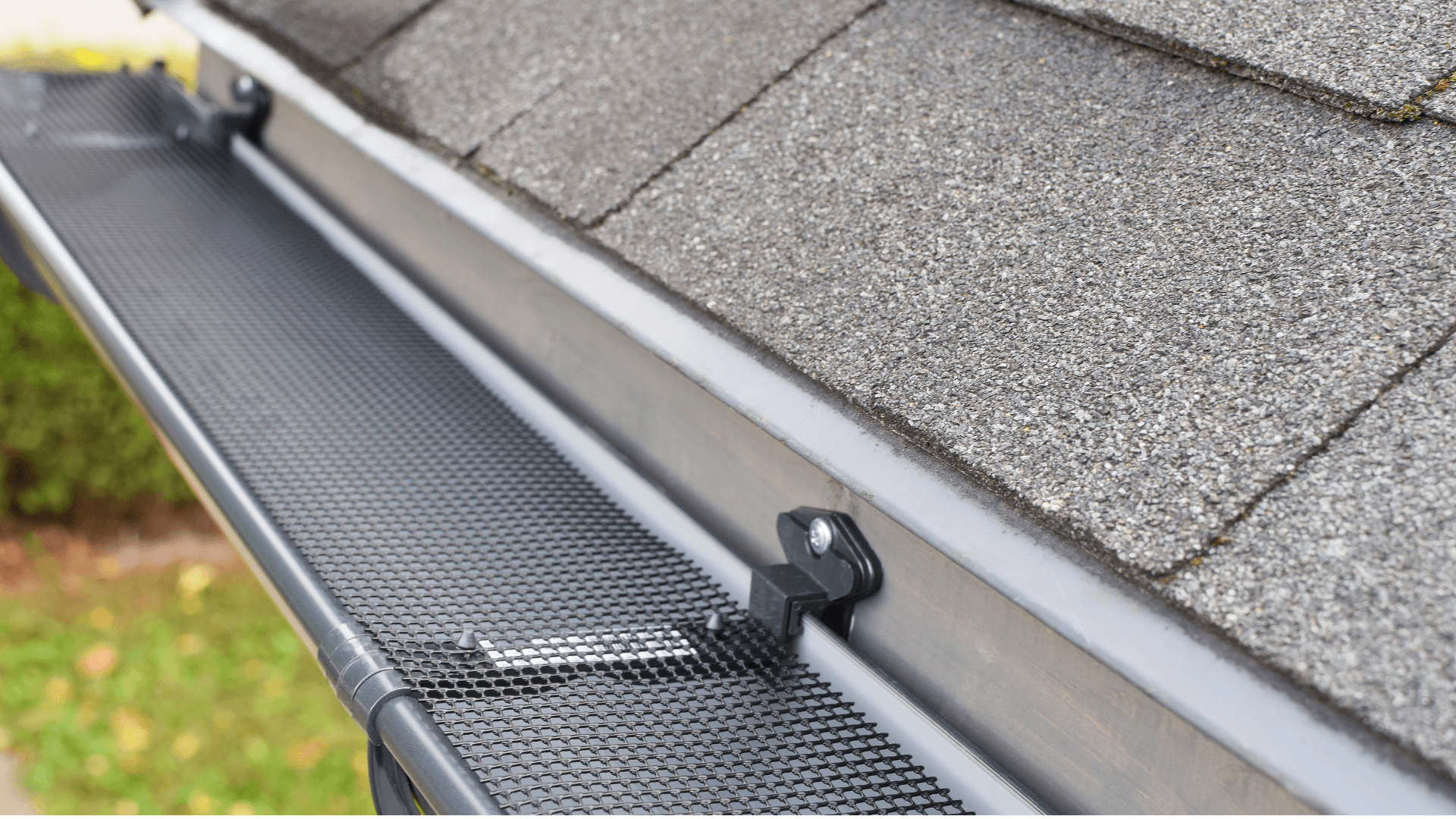
Clogged gutters are one of the headaches homeowners don’t want to deal with year-round. Leaves, pine needles, seed pods, and more quickly pile up in gutters without effective gutter guards. Clogged gutters can lead to water backup, sagging, and roof or foundation damage if left unaddressed.
Gutter guards are designed to solve this issue. However, not all guards perform the same. Some block debris for years, while others clog nearly as fast as an unprotected gutter. This gutter guard guide compares the five most common gutter guard styles and discusses why micro mesh gutter guards are one of the best options for homeowners.
Gutter Guard Mesh-Size-to-Debris Table
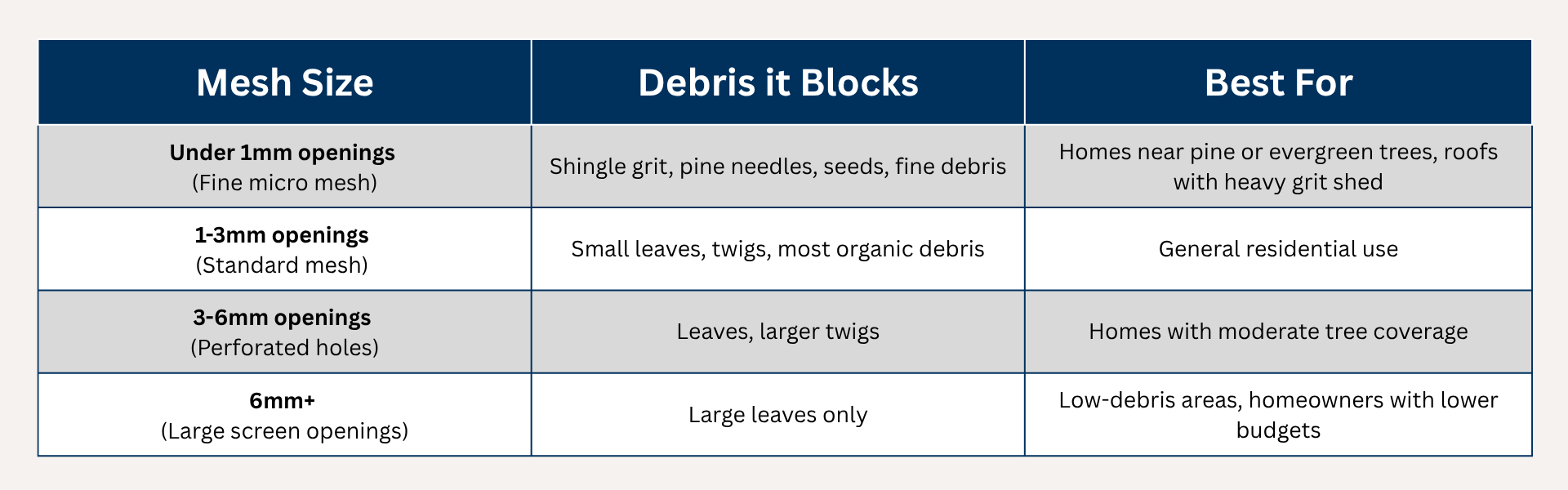
Before we compare gutter guard types, let’s cover how mesh size impacts what debris gets through. This mesh-size-to-debris table compares the varying sizes of mesh and for whom they work best. Getting this wrong is one of the top reasons homeowners end up disappointed by a guard they just installed.
Type-by-Type Gutter Guard Material Comparison
Before installing wire mesh gutter guards, understand the strengths and weaknesses of each type.
Micro Mesh
Micro mesh gutter guards are made of surgical-grade stainless steel mesh and feature small openings typically between 50–990 microns. Rainwater can easily flow through the micro mesh, but debris like leaves, pine needles, and twigs is filtered out. Wire mesh gutter guards are one of the most effective options for homes surrounded by trees or located in areas with heavy pollen and seed drop.
Stainless steel micro mesh gutter guards resist rust and hold up well over time, making them ideal for coastal or humid climates. For drier regions, aluminum micro mesh gutter guards offer a lighter-weight, more budget-friendly alternative.
Perforated Guards
Some people use solid panels with punched holes instead of woven wire mesh as gutter guards. Perforated guards are effective for mid-tier filtration and offer durability. They are typically more rigid and hold their shape well under snow load. They’re more heavy-duty than lightweight screen options but let in more fine debris than micro mesh or screen guards. The large, evenly spaced holes can let heavy grit or pine needles through. Overall, debris may build up quicker in perforated guards than other guard types.
Screen Guards
Screen guards use a looser weave with larger openings. They are often an affordable option for homeowners but don’t offer the same level of performance as micro mesh guards. Screen guards generally catch large leaves but let smaller debris, grit, and seeds pass through. Over time, debris can accumulate and clog the system, requiring more frequent cleanings than you’d expect from a “no-clean” solution.
Foam Guards
Foam guard inserts sit directly inside the gutter channel and block debris by density rather than mesh size. This gutter guard option is popular among DIYers because it’s inexpensive and relatively easy to install over a weekend. The downside is that foam can degrade in sunlight, trap moisture, and grow mold or plant life. Foam guards often require much more frequent replacement than mesh gutter guards, which can add up over the years.
Brush Guards
Brush guards almost look like oversized pipe cleaners that fit inside the gutter. These cylindrical bristle inserts are one of the least expensive gutter guard options on the market. They are simple to install without professional help, but offer the least reliable protection. Fine debris can settle at the base of the bristles, which is difficult to spot from the ground. Brush guards require frequent and time-consuming maintenance.
Why Micro Mesh Wins for Most Homes
Micro mesh for gutters is generally the best option for most homes because it offers the highest level of filtration with low maintenance needs. Unlike the other gutter guard options, micro mesh doesn’t degrade quickly or trap moisture, and offers long-term dependability.
In particular, stainless steel micro mesh gutter guards offer strong corrosion resistance, which makes them a great investment for homes in coastal or humid regions. Homeowners who don’t want to worry about replacing or cleaning out the gutter guards each season should consider a micro mesh gutter mesh guard.
Shop Gutter Guard Mesh at TWP Inc.
Interested in micro mesh for gutter guards? TWP Inc. offers a wide variety of gutter guard wire mesh options, including stainless steel and aluminum materials. For custom sizing, we also offer in-house slitting services for wire mesh and hardware cloth. Share your finished gutter guards with us on Instagram using #TWPWireMesh!