Industrial Wire Mesh by Application
Industrial wire mesh can be used in a wide variety of ways, including filtration & separation, construction & building, shielding & screening, and specialized or high-performance applications.
Filtration & Separation
Precision woven wire mesh is ideal for filtration and separation applications in industries such as water treatment, pharmaceuticals, food and beverage, and chemical processing. Mesh with small openings is used to separate fine particles and filter out sediment and debris from fluids passing through.
Construction & Building
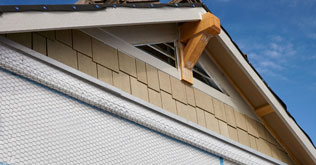
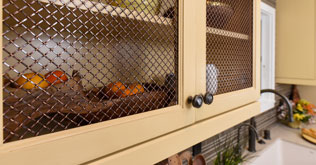
Industrial wire mesh can also be used in construction and building as concrete reinforcement, pest control, architectural facades, and more. Contractors use wire mesh for security fencing, ventilation, window guards, and foundation reinforcement.
Shielding & Screening
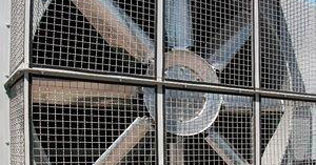
Interwoven metal mesh grids are frequently used as EMI and RFI shielding vents to block electromagnetic and radio-frequency interference. Beyond shielding, metal mesh is also used for machine guarding, fireplace screens, splatter guards, and insect screens.
Specialized/High-Performance
Industrial wire mesh is used in aerospace applications such as oil and fuel strainers and cryogenic fluid management. It can also be used in renewable energy systems to generate hydrogen via electrolysis. Additionally, wire mesh is used for sound reduction and high-temperature gas diffusion in aerospace and automotive exhaust systems.
Compliance & Standards
TWP Inc.’s industrial wire mesh meets rigorous quality standards and performance benchmarks. Our mesh is manufactured to comply with industry specifications, such as ASTM standards, to ensure consistent opening sizes, weave tolerances, and wire diameters.
We use corrosion-resistant alloys suitable for FDA-regulated food, beverage, and pharmaceutical applications. We also sell custom-specification mesh for project-specific performance criteria.
Industrial Wire Mesh FAQs
What mesh specification is used for hydraulic filtration?
For hydraulic filtration, mesh is generally specified by its micron rating, mesh count, wire diameter, and weave type. Micron rating represents the smallest particles that the mesh can trap. Mesh count is the number of openings per linear inch. Wire diameter specifies how thick the strands of metal wire are. Lastly, weave type helps determine the mesh’s strength, durability, and flow characteristics.
What's the difference between absolute and nominal filter ratings?
The absolute rating of a filter indicates that nearly all (98-100% efficiency) particles larger than a certain size will be captured by the filter. It is a guaranteed, tested threshold. Nominal filter ratings indicate the approximate or average efficiency (typically around 60-90%) at removing particles of a certain size. Nominal filter ratings are used for applications where some variability is acceptable.
Can wire mesh be used at high temperatures?
Yes. Wire mesh can be used at high temperatures. Performance will depend on the specific metal the mesh is made from.
What's the lead time on custom mesh discs?
The lead time for custom mesh discs depends on the size, material, and quantity needed. Contact us for current lead times.
Do you offer material certifications?
Yes. TWP Inc. offers mill test reports and certificates of conformance for our wire mesh products.
Precision Woven Mesh Industrial Supplier
From building and industry to DIY and decorative, TWP Inc. has a wire mesh solution for any project. We also offer highly accurate, efficient, and economical laser cutting and slitting services. Our experts are on hand to help you every step of the way. Contact us today!