- Free Shipping On Select Items
- Free Sample
- Sign Up and Save


The Best Wire Mesh for Compost Bins (and How to Build One)
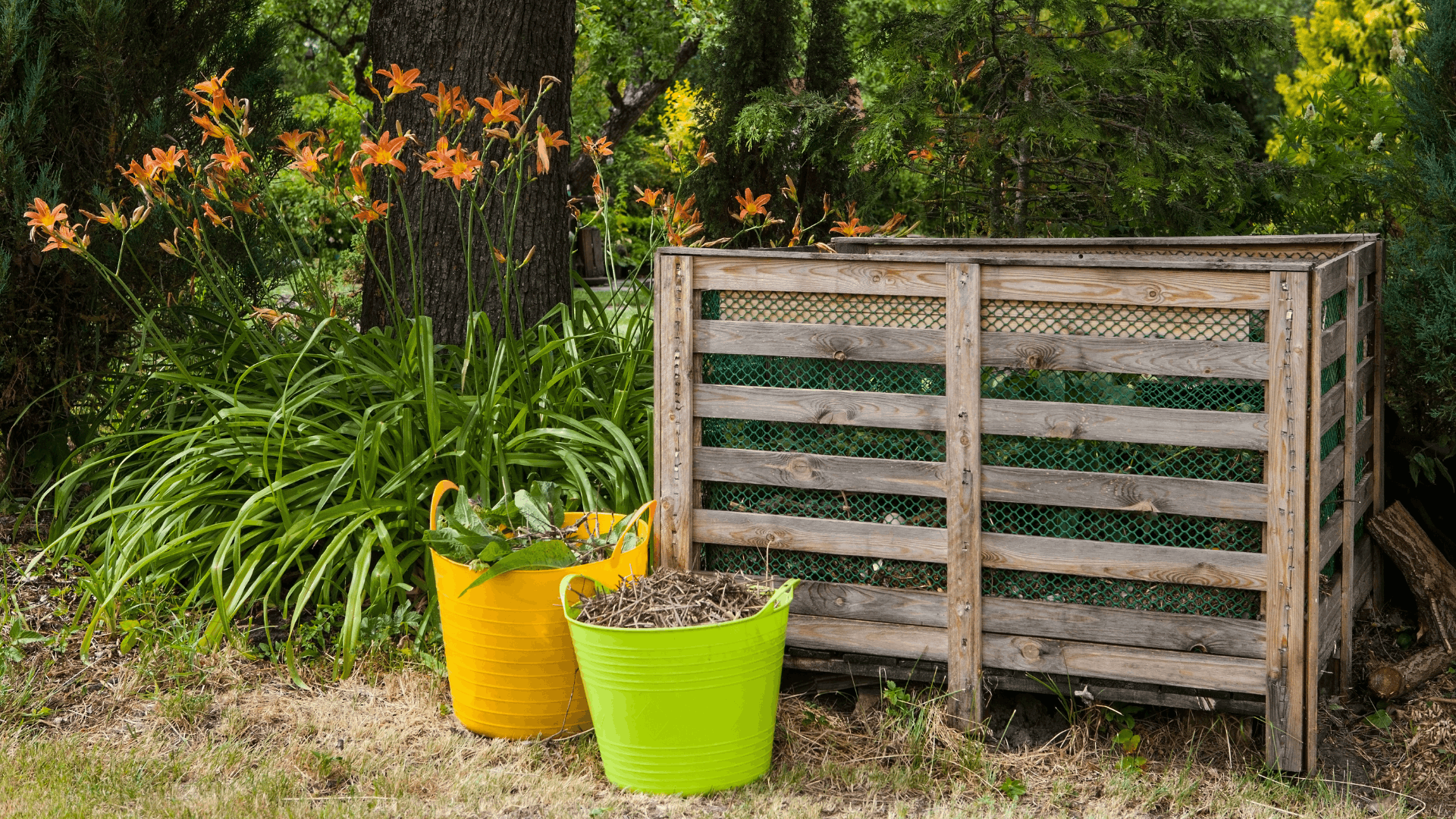
If you’re a gardener, you probably already know composting is an essential part of fertilizing your garden. Compost enriches soil with nutrients and helps plants grow by introducing beneficial microbes and retaining moisture. The best part? You can make your own compost and store it outside in your garden!
A wire mesh compost bin makes for an easy and useful addition to your garden. This guide will explain how to choose the right mesh for a compost bin and how to build your own, step by step.
What is a Wire Mesh Compost Bin?
A wire mesh compost bin is an affordable DIY storage option for composting. Most wire mesh compost bins are 3’ tall by 3’ wide to support breathability for aerobic decomposition and microbial heat generation. It’s recommended that compost bins be cylindrical for easy turning.
Chicken Wire Compost Bin vs. Hardware Cloth: Which is Better?
Whether you build a hardware-cloth compost bin or a chicken-wire compost bin is up to you. However, choosing between the two comes down to your goals, materials, and preferences.
Chicken Wire for Compost Bins
Chicken wire (also known as hex mesh) is an affordable option for gardeners just starting with composting. It works well as a holding ring, but doesn’t offer the same level of pest protection or longevity as hardware cloth.
-
Pest control: Since chicken wire features a large hexagonal pattern with 1” openings, it isn’t as protective against mice, rats, raccoons, and other pests as hardware cloth.
-
Durability: Chicken wire is more flexible than hardware cloth, limiting its durability. It can sometimes bulge, tear, or warp under pressure when heavily filled.
-
Cost: A primary benefit of chicken wire is its high cost-effectiveness for compost bins. It is a budget-friendly option, especially for temporary compost piles.
-
Maintenance: Chicken wire is very easy to bend into any shape. However, since most chicken wire is not galvanized, it will rust over time when exposed to natural elements and moisture.
Hardware Cloth for Compost Bins
Many gardeners consider hardware cloth (also known as galvanized welded wire mesh) to be the superior material for compost bins. It offers great pest control and is typically much longer-lasting than chicken wire.
-
Pest control: Since hardware cloth is typically ½" galvanized welded wire mesh, it effectively keeps out pests, including mice, rats, and other vermin interested in the compost.
-
Durability: Galvanized welded wire mesh features welded joints, offering enhanced durability. It holds its shape well, even when packed with heavy, wet compost.
-
Cost: While hardware cloth compost bins cost more upfront to make, they can last significantly longer than chicken wire variants.
-
Maintenance: Hardware cloth compost bins are stiff, meaning they may be harder to roll up or move around, but galvanized wire can last for years without rusting in outdoor environments.
How to Build a Wire Mesh Compost Bin Step by Step
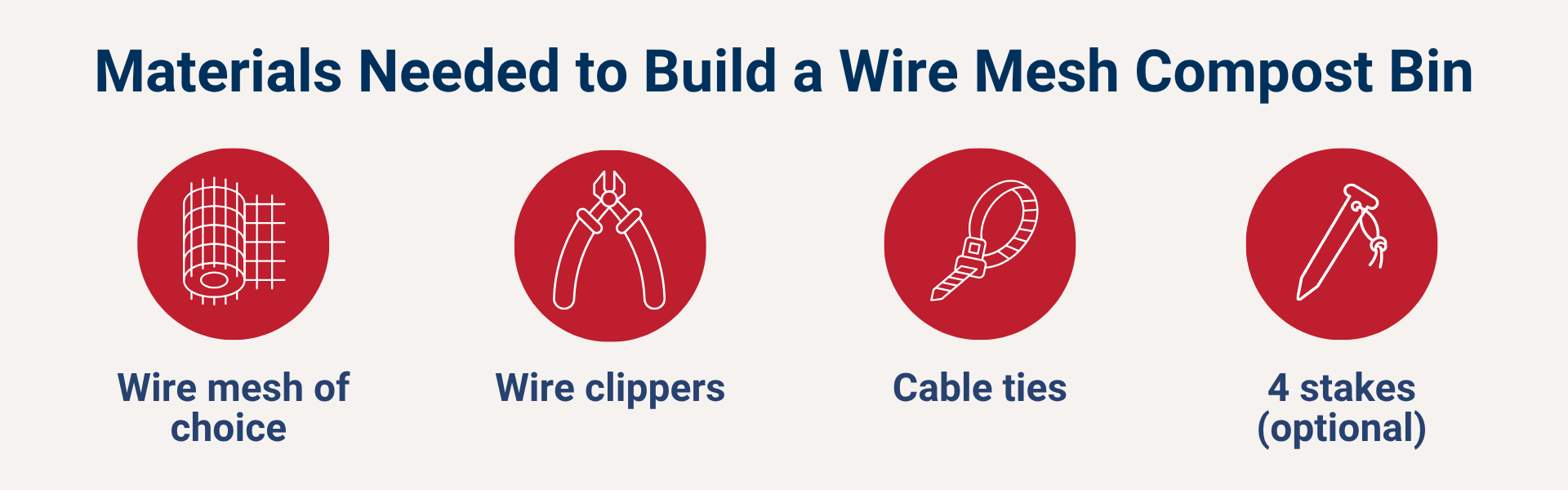
Materials Needed
-
Wire mesh of choice (hardware cloth or chicken wire)
-
Wire clippers
-
Cable ties
-
4 stakes (optional)
How to Cut and Shape the Wire Mesh
For a larger compost bin, you may want to place four stakes in the ground to create a perimeter. Stakes add extra structure and prevent the bin from blowing over or getting too bent out of shape.
Once you’ve placed your stakes firmly in the ground, you can cut and shape the wire mesh. To start, loosely wrap the wire mesh panel around the stakes to measure where you need to cut. The ideal size for compost bins is 3' wide x 3' tall, so you can also use those dimensions and place stakes where necessary.
Shape the wire around the stakes with adequate pressure, then trim the wire mesh panel to the proper size along the length using wire clippers.
Securing the Wire Mesh
After you’ve trimmed the wire mesh to the correct dimensions, you can secure the ends with cable ties or by twisting them around the existing wire. Cable ties help improve the compost bin's durability but aren’t required.
Then, you can shovel in your organic material over the wire to create nutrient-rich compost for your garden.
Shop TWP for the Best Wire Mesh for Compost Bins
TWP Inc. has been an industry-leading provider of industrial wire mesh since 1969. Founded in Berkeley, California, our woman-owned company is proud to serve industrial, construction, and building companies, as well as homeowners and DIYers across the globe.
We already have garden-use wire mesh in stock and ready to ship, including chicken wire and hardware cloth. Share your finished compost bin with us on Instagram using #TWPWireMesh!