- Free Shipping On Select Items
- Free Sample
- Sign Up and Save


Fiber vs. Wire Mesh in Concrete: Why Builders Choose Welded Wire Mesh
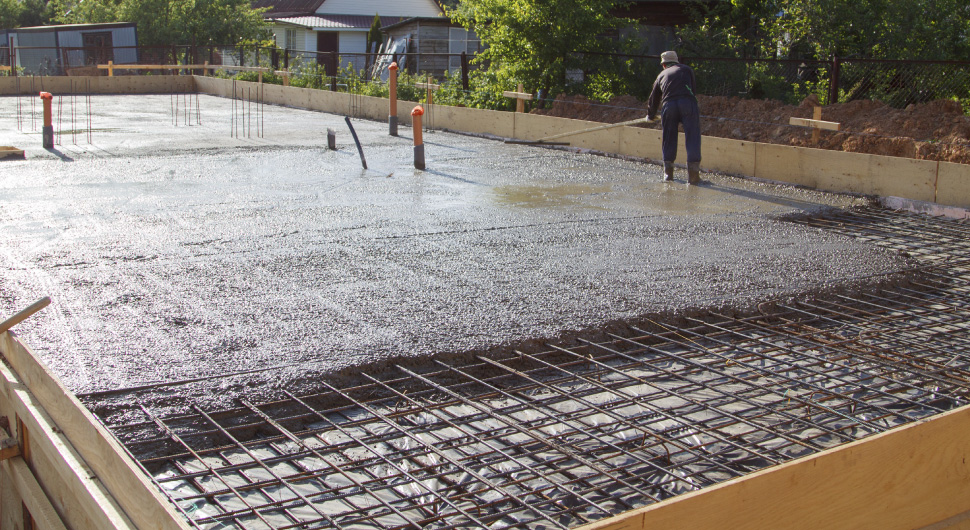
Welded wire mesh was once the go-to material for forming concrete slabs and reinforcements, but some builders have recently opted for the fiber variety. Though builders and contractors may cut costs by opting for synthetic mesh, there are a few things to consider before making the switch.
Read on to learn about fiber vs. wire mesh in concrete. This post covers the potential drawbacks of fiber mesh and why traditional welded steel mesh may be the best choice.
Is Fiber Mesh a Substitute for Wire Mesh in Concrete?
The short answer is no, and the distinction matters. Fiber mesh and welded wire mesh reinforcement address different types of cracking and are not designed to be interchangeable. Understanding what each one does, and does not do, is the first step toward making the right choice for any concrete project.
Fiber vs. Wire Mesh in Concrete
Here’s a breakdown of the differences in using welded wire mesh reinforcement in concrete vs. reinforced concrete with fiber mesh. While both fiber and wire mesh are used to reinforce concrete slabs and improve their performance, builders should consider their differences.
What is Fiber Mesh in Concrete?
Fiber mesh is a reinforcement material made from synthetic (polypropylene), glass, or steel fibers mixed directly into the concrete batch before pouring. Fiber mesh concrete gets its reinforcement from fibers distributed throughout the slab, helping control plastic shrinkage cracking — the fine surface cracks that develop as concrete dries and cures. Because the fibers are already in the mix, no positioning or on-site setup is required.
Fiber mesh does not, however, provide structural load-bearing reinforcement or prevent cracks from widening once they form. When a crack develops, the fibers can slow the initial fracture but lack the tensile strength to keep both sides of the slab on the same plane. That alignment is what prevents differential settling — and is where welded wire mesh makes the difference.
What is Welded Mesh Reinforcement?
Welded wire mesh reinforcement is made by bonding intersecting wires with an electric current into a rigid, high-tensile grid. The welded structure maintains consistent spacing and, when properly supported on chairs during the pour, holds its position in the slab. When a crack forms, the mesh holds both sides of the fracture together and keeps them in alignment, preventing the differential settling that makes cracks structurally dangerous and expensive to repair.
For a closer look at wire mesh in commercial concrete applications, see TWP Inc.’s guide to welded wire mesh as a concrete solution for contractors.
| Cost | Durability | Longevity | |
| Fiber Mesh | Material cost can vary depending on the fiber type. Mixing directly into the concrete at a plant or on-site eliminates the labor of separate placement and reduces installation time. | Fiber mesh distributes reinforcement evenly throughout the concrete slab, controlling shrinkage cracking and reducing microcracking during the curing process. Synthetic fibers also carry a lower corrosion risk. | Fiber mesh in concrete maintains slab integrity by limiting crack width and extends the life of light or moderate-load slabs. |
| Welded Wire Mesh | Welded wire mesh takes longer to install because it must be properly positioned, with costs covering both labor and materials. For larger pours, the process can also be labor-intensive. | Welded wire mesh is ideal for structural reinforcement when properly placed. It must remain centered in the concrete slab to control cracking effectively. |
If properly embedded into the concrete slab, welded wire mesh can provide long-term structural support. The effectiveness is dictated by its positioning during the pour. |
For help deciding between wire mesh and rebar for your next pour, see: Rebar vs. Wire Mesh: Which Should You Use in Your Concrete Patio or Driveway?
What to Consider Before Using Fiber Mesh
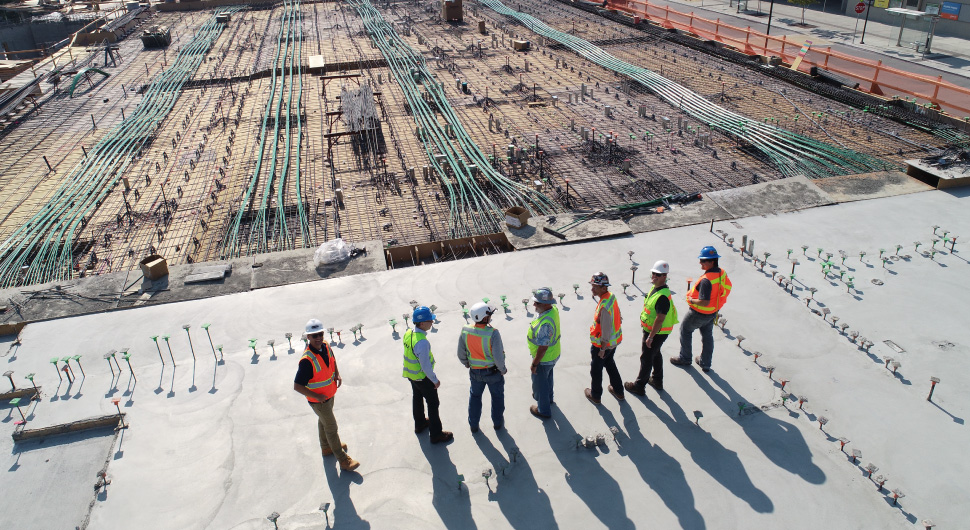
One of the main reasons mesh is used for concrete slabs is to prevent surface cracking. Though fiber mesh concrete cuts down on the number of breaks, it doesn't eliminate them entirely. Not only that, but when cracks appear, fiber mesh often lacks the strength to stop them from spreading.
So, while synthetic mesh may be more affordable upfront, builders could end up paying more for repairs down the road. Visible cracks on a new build raise immediate questions about structural quality and can create liability and costly rework for contractors.
Another thing to consider is that fiber mesh doesn't do as good a job preventing differential settlement. Given that a level foundation is vital and fixing it isn't always simple, this is a major concern.
In many projects, the best approach is to pair reinforced concrete with fiber mesh alongside welded wire mesh. Fiber controls microcracking during the curing phase, while wire mesh provides the structural support needed to prevent differential settling over the life of the slab. The right combination depends on local soil conditions: in areas with clay or expansive soils, wire mesh is essential. While relying on fiber alone can lead to repair costs that far outweigh the initial material savings. In sandy, stable soil conditions, fiber mesh alone may be sufficient for lighter residential applications.
Welded Wire Mesh for Concrete Reinforcing
Created by heating intersecting metal wires with an electric current, welded wire mesh boasts impressive rigidity. Galvanized welded wire mesh is resistant to abrasion, rust, corrosion, and extreme temperatures.
These characteristics make welded stainless steel cloth ideal for concrete reinforcement, a process that relies on exceptional strength and inflexibility. The durable alloy also helps ensure foundational evenness.
Builders also use welded wire mesh when constructing highways to provide sufficient reinforcement. The mesh typically comes in large sheets up to 13’ x 40’.

Do Concrete Slabs Really Need Welded Wire Mesh?
There's no one-size-fits-all way to construct houses and buildings. The choice of materials often depends on various factors, like availability, budget, and whether substantial settling is common in the area.
All that said, welded reinforcement concrete mesh remains the gold standard for construction. The heavy-duty product is incredibly sturdy, resilient, long-lasting, and versatile.
Minor cracks and slight foundational settling are often to be expected, even with new builds. Still, too many imperfections can signify poor workmanship and lead to prospective buyers feeling dubious about the structural integrity.
While it’s not strictly required, welded wire mesh is highly recommended for use in concrete slabs to control shrinkage cracking and provide structural integrity.
Ensuring Crack-Free Concrete
Choosing welded metal mesh over fiber is the best defense against cracks in concrete slabs. However, as with all structural projects, the material can't do its job if it's not installed correctly. Proper installation ensures the maximum level of strength is applied, which keeps breaks to a minimum.
For more insight into this topic, see our Guide to Wire Mesh for Construction & Building.
Metal Wire Mesh Products for Construction & Building
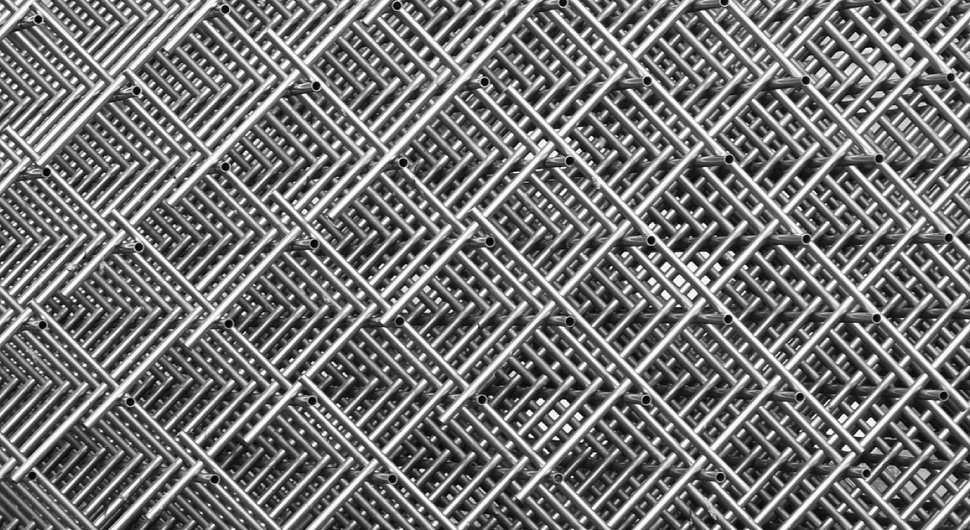
TWP Inc. is a woman-owned business founded in Berkeley, California in 1969. As one of the top wire mesh suppliers in the world, TWP Inc. is a premier resource for critical construction and building materials. With an extensive in-stock inventory and fast, reliable shipping, when you shop our inventory, you'll find T-304 and T-316 welded stainless steel mesh with various gauges, opening sizes, and mesh counts.
We also offer expert in-house services, including laser cutting, disc stamping and sizing, roll slitting, and ultrasonic cleaning. If you don't see the specification you're looking for, we're happy to accommodate custom orders.
View Our Services | Request a Free Quote | Contact TWP Inc.
To have your wire mesh installation photos featured in our online gallery, share your finished project on Instagram using the hashtag #TWPWireMesh.
For more news and insight into how metal mesh is used in your industry, connect with TWP Inc. on LinkedIn.